
WhatsApp Send Message Link: Why the Link Is the Smallest Part
A WhatsApp send message link is a wa.me URL that opens a chat with a specific number when someone taps it, and it is the fastest way to move a customer off a webpage and into a conversation. Most businesses stop there and treat the link as the whole job. The link is the smallest part of the job. What happens in the sixty seconds after someone taps it decides whether the conversation turns into revenue or into a support ticket nobody owns.
What a WhatsApp Message Link Is, and What It Saves
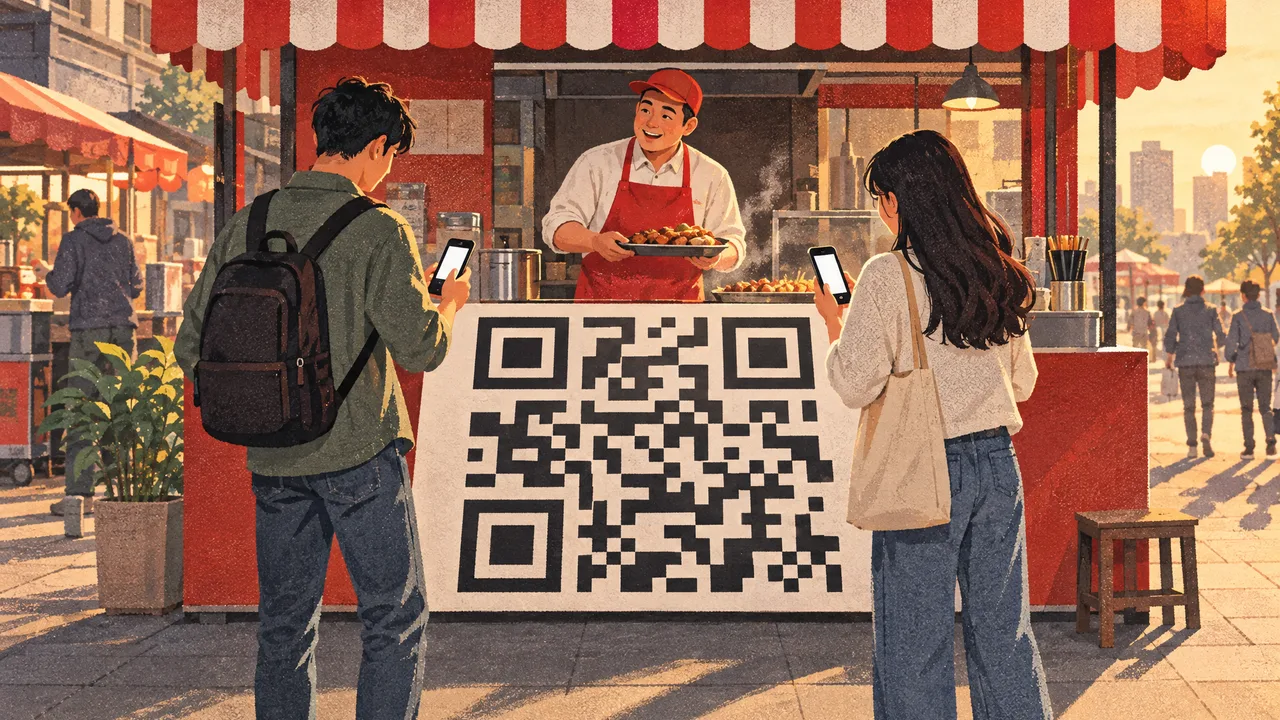
A WhatsApp send message link is a click-to-chat URL built from the wa.me domain plus a phone number in international format, with an optional ?text= parameter that pre-fills the first message. Anyone who taps it lands in a chat with that number, whether they have saved the contact or not. That is the entire mechanism. No app install, no address book entry, no QR code required.
WhatsApp has grown into a business channel in its own right. As of June 2023, WhatsApp Business reported having over 200 million monthly active users (MAU) worldwide, according to Statista. A link is what lets a business tap that base from a website, a printed flyer, or an Instagram bio.
Here is what the link does not do. It does not tell you which campaign sent the person, which page they came from, or who on your team should answer. It does not create a record that survives a phone change. It does not queue, retry, or escalate. A wa.me link is a doorway with no doorman.
The confusion most teams run into is between a link and a broadcast. A link invites one person into one chat. A broadcast pushes one message to many people, and it runs on different infrastructure entirely. If your goal is reaching a list rather than inviting a click, broadcast message best practices covers the rules that apply there, including opt-in and template approval. Mixing the two up is the reason some teams build a beautiful link and then wonder why it never produced volume.
One adjacent concept worth naming: message forwarding. A 2024 paper on measuring forwarding at scale, Melo et al., Proceedings of the International AAAI Conference on Web and Social Media, studies how messages move from person to person rather than from business to customer. That distinction matters here, because a link shared by a customer is a different object from a link you publish. You control one and you merely hope for the other.
What Makes One Link Better Than Another
Two links that open the same chat can produce different outcomes. The difference sits in five places, and each one is checkable before you publish.
- Number formatting. The link must use the country code with no leading zero, no spaces, and no dashes. A link with a local-format number opens an error screen on some devices and a wrong contact on others.
- Pre-filled text. The
?text=parameter should say something specific. A blank compose box asks the customer to write the opening line, and many will not. - A destination for the click. If the conversation that opens has no owner, the link funnels people into a queue that never drains.
- Attribution. Session-ending events on the WhatsApp Business Platform reset 24 hours after the first business message is delivered, per the WhatsApp Business Platform FAQ. Without attribution you cannot tell which link started which session.
- Fallback behavior. Some visitors will not have WhatsApp installed. What they see instead is part of the link's design, not an afterthought.
The practical test is whether a support agent can look at an incoming chat and answer three questions: who is this, where did they come from, and what did they want. A plain wa.me link answers none of them. A link that feeds a tracked inbox answers all three.
Free bulk tools sit at the opposite end of this spectrum. Free bulk message tools work until volume or accountability catches up, and the moment they stop working is usually the moment a business first notices it needed a system rather than a script.
How to Send a Link in WhatsApp Without Losing the Context
Building the link takes a minute. Building the context around it takes thinking. These steps run in order, and each one assumes the previous step is done.
- Write the number in full international format. Country code first, no plus sign inside the wa.me path, no leading zero. Save this number somewhere your team can find it, because a typo here is invisible until a customer reports it.
- Decide the pre-filled message. Keep it under a sentence. "Hi, I saw your pricing page" gives the agent context. "Hi" gives them nothing.
- Pick where the link lives. A website button, a QR code on packaging, a bio field, an email signature. Each placement has a different intent behind the click, and that intent should shape the pre-filled text.
- Route the resulting chat to a person. This is where manual links break down. A shared inbox with assignment rules means the chat lands with someone who is working that shift.
- Set the response expectation. If your team answers within an hour, say so on the page that hosts the link. If nobody is watching the inbox until Monday, a Saturday click becomes a Monday complaint.
- Track which link produced which conversation. Without this, you are optimizing blind.
Step four is where scale changes the answer. Sending bulk without losing your number covers why unauthorized bulk sending gets accounts restricted, and the same logic applies to links: the mechanism you use to invite people in has to be one the platform recognizes as legitimate. A single wa.me link is legitimate. Ten thousand links sent through an unofficial tool are not.
The 24-hour session rule shapes step five more than most teams expect. Replies inside the customer service window are free on the WhatsApp Business Platform, per Authgear, which means a fast reply costs you nothing and a slow one costs you a paid template. Speed is not just courtesy here. It is the cheaper path.
How to Decide Between a Manual Link and a Platform
The decision is not about preference. It is about whether the conversation needs an owner.
Pick a manual wa.me link when one person handles every inbound chat, when daily volume fits inside a lunch break, and when you can honestly say no conversation sits unanswered overnight. That is a real scenario, and for a solo operator it is fine. The trade-off is that the link creates no record, so the day you add a second person to the inbox, nobody can tell who replied to whom.
Move to a platform when any of these signals show up:
- Two or more people answer the same number, and a customer gets a reply from a different person each time.
- You are running campaigns and cannot say which one produced the conversations.
- A reply takes long enough that the 24-hour window closes before your team gets to it.
- You want to follow up with someone who went quiet, and you need a compliant way to do it.
The signal that settles it fastest is the second one. Attribution is the difference between a marketing channel and a mystery. If you cannot connect a conversation to the thing that caused it, you are spending on campaigns and guessing at results.
For the mechanics of making a link itself perform better once it is in a chat, stop pasting raw URLs covers how a bare URL in a message compares to a structured one with context around it.
Common Mistakes to Avoid
A number written in local format is the failure that looks like a platform problem. Someone publishes a link with a leading zero, taps it on their own phone where it happens to resolve, and ships it. Customers with different carriers see an error. Always test a link from a device that has never contacted that number before.
Sending a link to someone who never asked for it gets the message reported, not read. WhatsApp's rules on business-initiated contact exist because of exactly this pattern, and a link does not grant permission to send it. If you are reaching out first, opt-in is the entry requirement, not a formality.
Assuming a link is blocked when the real issue is a reinstalled app sends teams down the wrong path for a week. A customer who deleted and reinstalled WhatsApp loses their chat history, and the thread they thought they had is gone. The link still works. Their history does not.
Pasting a raw long URL into a chat is a formatting mistake with a measurable cost in clicks. It looks like spam, it wraps badly on small screens, and it gives the reader no reason to tap. A short line of context plus the link outperforms the bare string. The common link mistakes that show up most often in practice are these, not exotic edge cases.
Treating the link as a campaign rather than a doorway is the mistake that hides behind all the others. A link has no reach of its own. It converts traffic you already have. If nobody is visiting the page that hosts it, a better link changes nothing.
About WhatsBox
We build for the moment after the tap. Our shared team inbox assigns a conversation to one person and runs a session timer, so the next reply does not land after the window closes. That timer is the feature that surprises teams most, because it turns an invisible platform rule into something a support agent can see.
When you are inviting people in at volume, our bulk broadcasts go out through the official WhatsApp Business API and only reach contacts who opted in. Our AI chatbots are trained on your knowledge base, so a product question gets an answer in seconds without waking anyone up. A human-in-the-loop escalation hands the thread to a person mid-conversation when the question outgrows the bot.
If you answer every message yourself and volume is modest, a plain click-to-chat link costs nothing and does the job. That is a fair place to start, and we would rather you say so than buy a platform you do not need yet.
When the inbox outgrows one person, get in touch and we will map your current flow onto the platform.
Frequently Asked Questions
How to create a link to send a WhatsApp message?
Build the URL as the wa.me domain followed by the number in full international format, with the country code and no leading zero, spaces, or dashes. Add an optional ?text= parameter at the end to pre-fill the first message the customer will see. Test the finished link from a device that has never messaged that number, because a formatting error shows up on someone else's phone, not yours. That single URL is the whole link; everything after the tap is a routing decision.
Can you put a link in a WhatsApp message?
Yes. Any URL you type or paste into a WhatsApp chat becomes tappable, whether you are a customer sending a product page or a business sending a booking confirmation. The constraint is not technical, it is behavioral: a raw long URL dropped into a chat reads as spam and gets fewer taps than a short line of context followed by the same link. If the message is business-initiated and outside the customer service window, it also has to go out as an approved template, and the link sits inside the template body.
Why can't I send links via WhatsApp?
Three causes account for most of these reports. The recipient deleted and reinstalled the app and lost their thread, so the link appears to have vanished rather than failed. The number in the link was written in local format, so it resolves to a different contact or an error page on some carriers. Or the account has been restricted for sending unsolicited bulk messages, which blocks outbound traffic entirely rather than blocking links specifically. Check the number format first, then the recipient's app state, then the account's standing.
WhatsApp Privacy Message Rules: Why the Thread Beats the Policy Page
A WhatsApp privacy message is a notice plus a consent record delivered inside the thread. Sending it there, before the first campaign, changes how every later message gets treated.
The WhatsApp Price List Most Buyers Never See Laid Out
Most WhatsApp price lists quote a headline number and skip the two other billing layers buyers actually pay. This walks through all three, in order, and how to read them.